Field edition — pre-release
The anti-speculation broadsheet
Vol. 01 · No. 001
Every development is sold with a flawless render: blue sky, lush trees, beautiful people. Antirender shows you the other picture — the same building a decade on, weathered, grimy, on a grey Tuesday in November. The antirender.
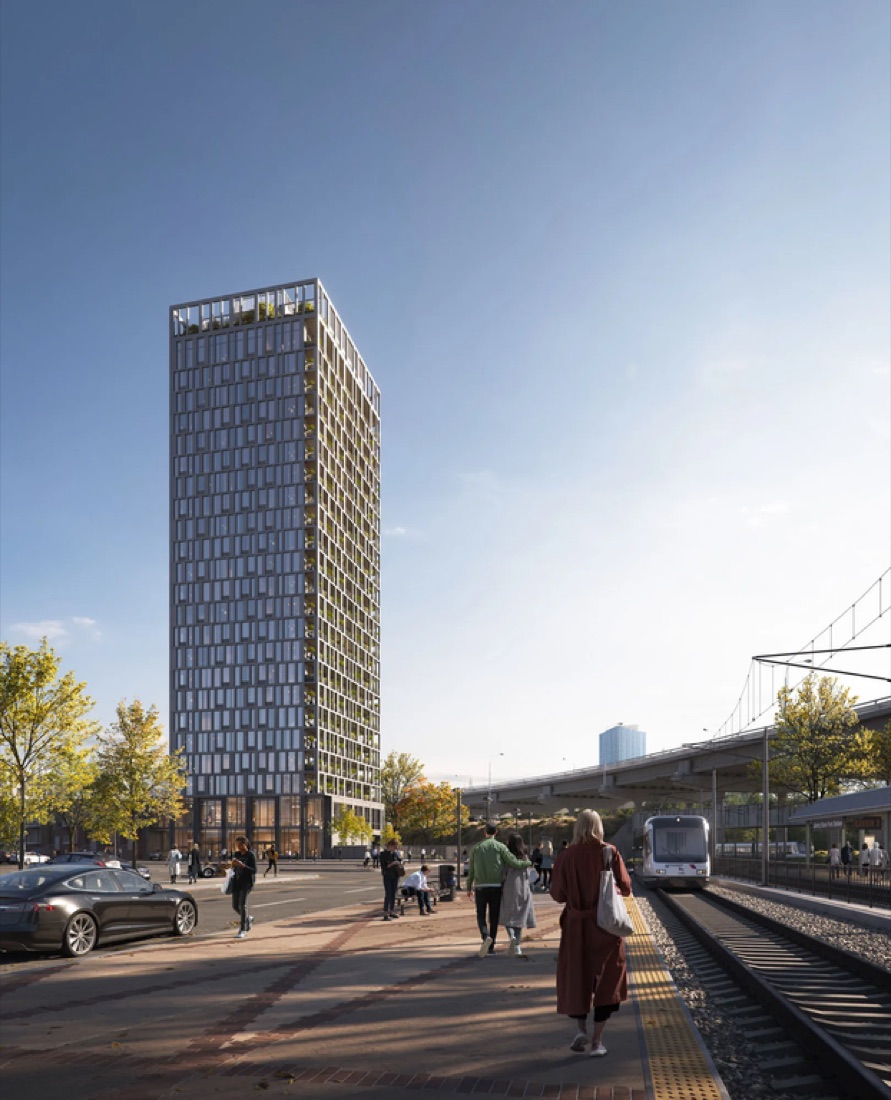
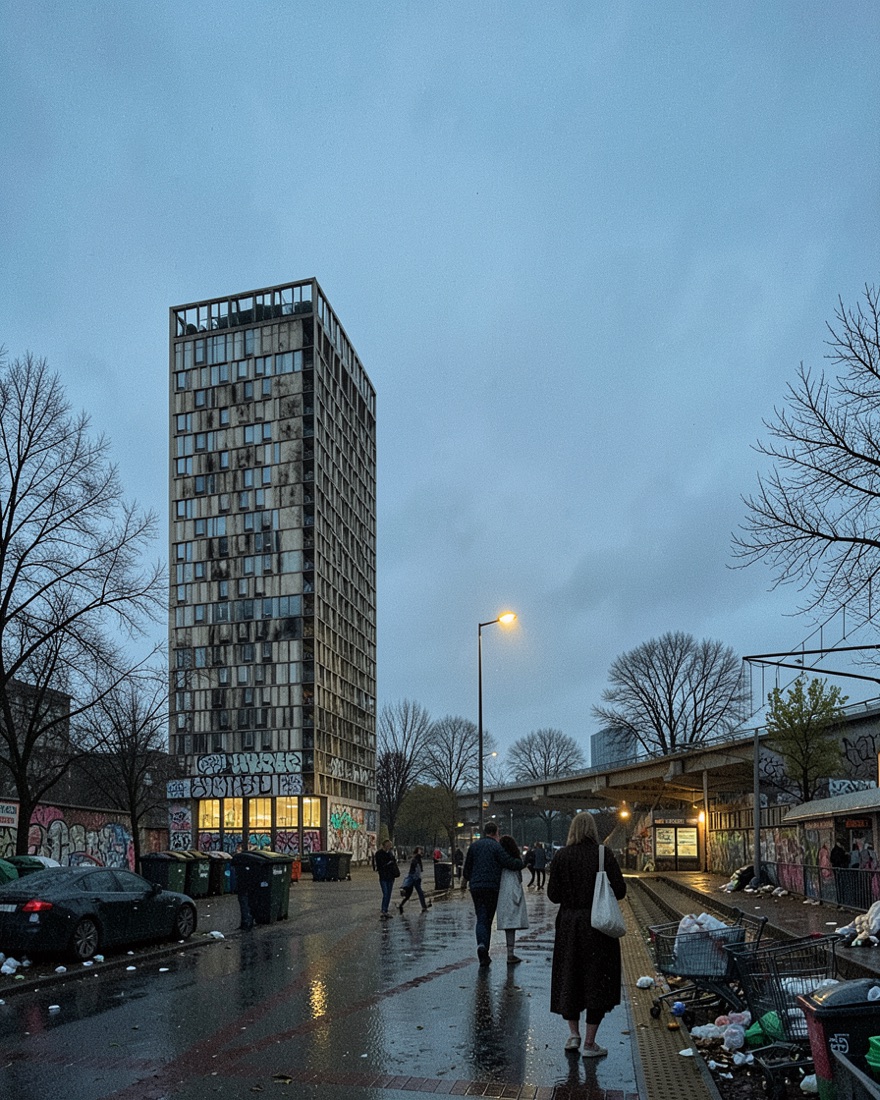
Same tower, same plaza — a wet Tuesday in November, a decade after the ribbon-cutting.
These are real Antirender results. The geometry and the colours are untouched; only the weather, the grime and the years have moved on.
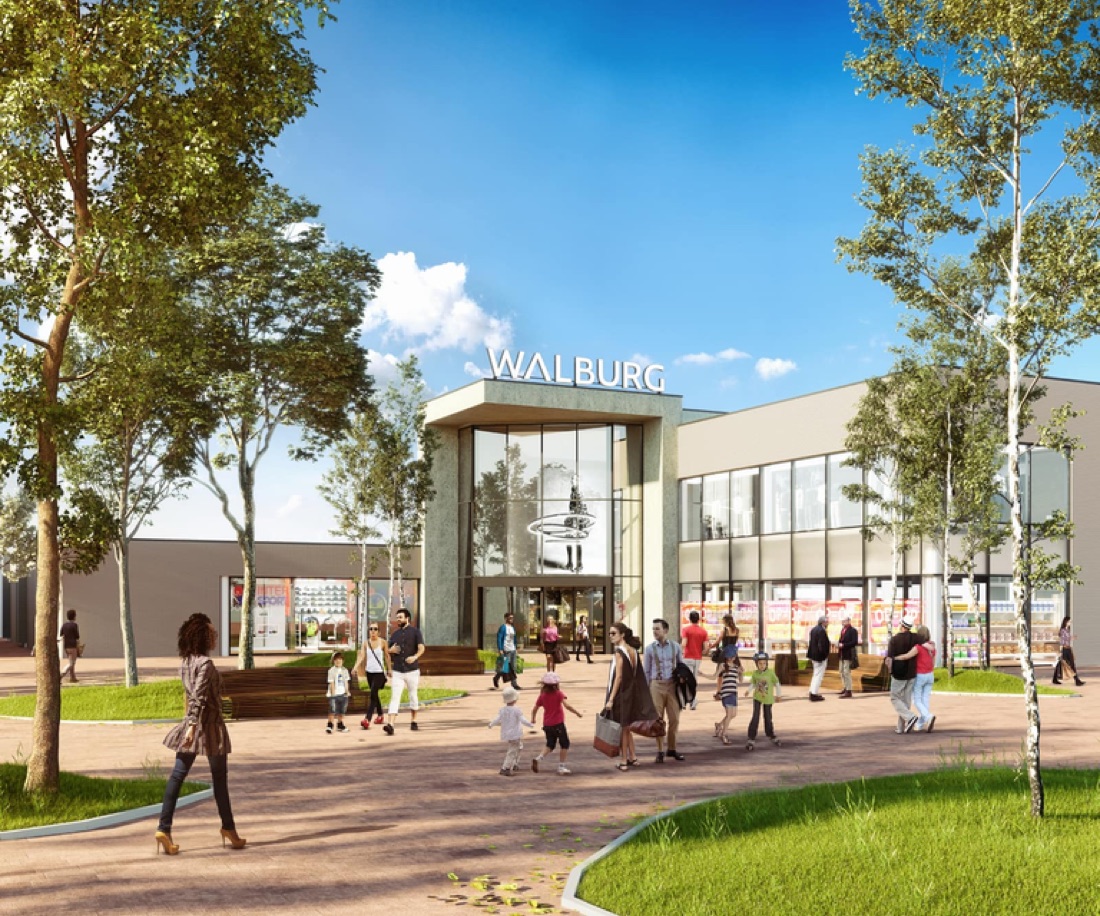
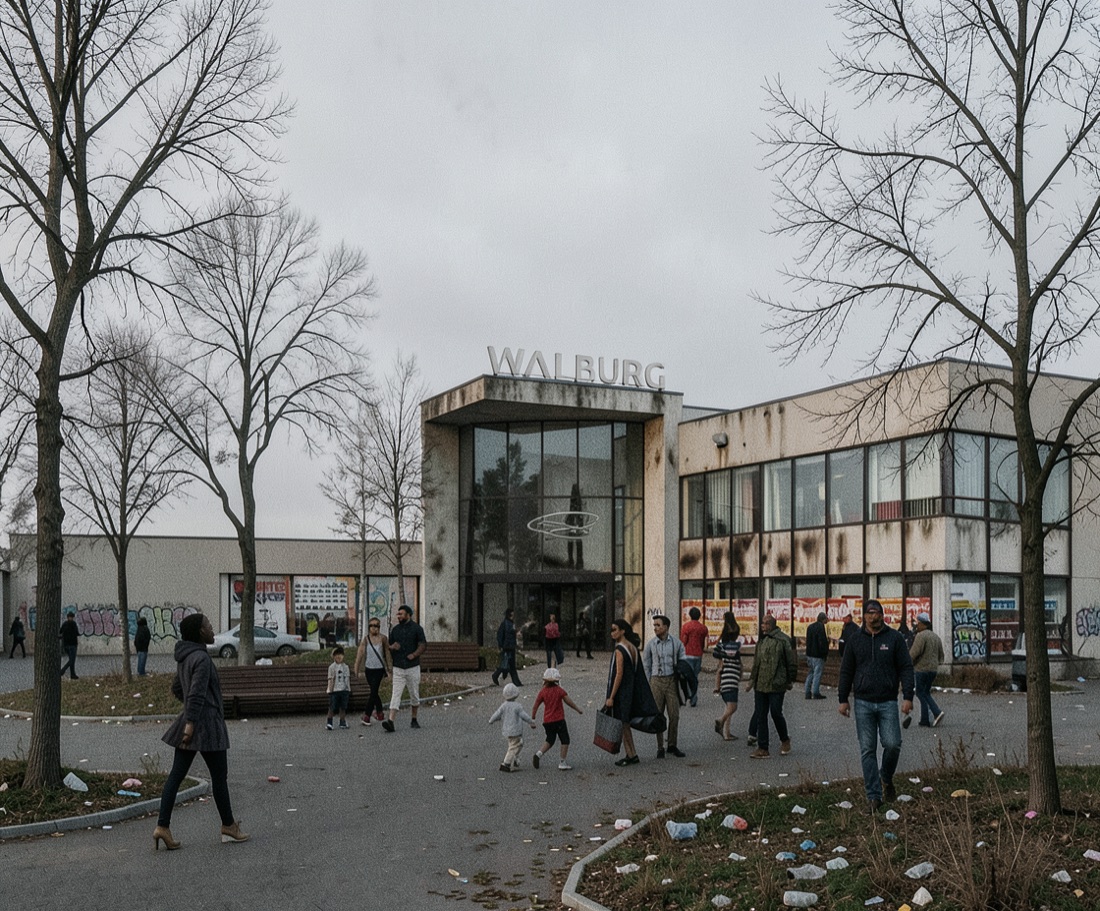
Real renders, processed by Antirender. You drop in any developer's render and Antirender ages the actual image — same geometry, same colours, only weathered. Grime runs downward from every ledge, trees lose their leaves, the sky goes flat and grey. Nothing is added that the setting wouldn't grow on its own.
No account. No render skills. Point it at the brochure and watch the gloss come off.
Photograph the planning notice, screenshot the brochure, or pick the developer's hero image straight from your camera roll.
It returns the same building a decade or two on — a grey Tuesday in November. Dial the years, grime, weather and decay to taste.
Get a clean Render / Antirender comparison, ready to take to the consultation, the comment thread, or the council.
A render is a sales tool dressed as a fact. It is always sunny, always summer, always the day the building opened. The trees are mature, the glass is spotless, and everyone is beautiful and going somewhere nice.
That picture wins the planning meeting. Then the scaffolding comes down and the cladding starts to streak, the trees that were drawn never get planted, and the plaza fills with the wind.
Antirender draws the other picture — the honest one — so the people who live next to a thing get to see it before it's built, not after. Free to use, no install, no account.
Antirender for iOS and Android is on its way. Until then, you can already do it in your browser — free.